Rue de l’Homme-Armé Residence
Les MisérablesRue de l’Homme-Armé Residence, at number 7 on a quiet lane in old Paris, becomes the refuge to which Jean Valjean brings Cosette and Toussaint after leaving Rue Plumet. Its narrowness and stillness seem to promise concealment, yet the address also draws the separated lovers back together. A note Cosette has written for Marius, accidentally preserved on her blotter, names the residence; later, both Inspector Javert and Marius arrive at its door. The place’s significance lies in that double movement: it shelters Jean Valjean while making reunion possible.
A hurried move to number 7
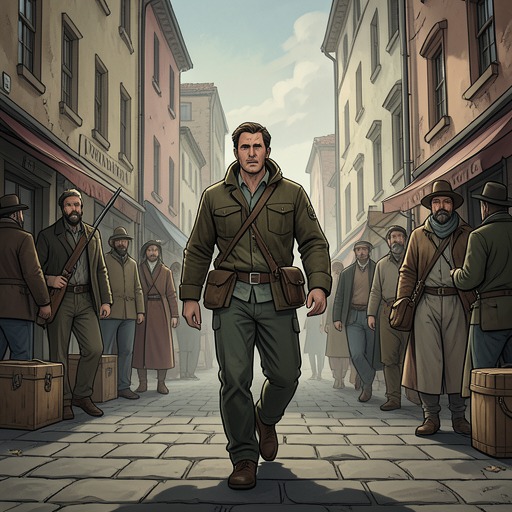
The move follows what the narrative presents as almost a flight from Rue Plumet. Jean Valjean takes little with him: only a small, scented valise that Cosette had named the inseparable. A load of trunks would have required porters, and porters would have meant witnesses. A carriage is brought to the door on Rue de Babylone, and they leave without drawing attention to their departure.
Toussaint has only managed to secure permission to pack some linen, clothes, and a few toilet articles. Cosette takes her writing materials and blotter. Jean Valjean arranges to leave the pavilion at dusk, allowing her time to write to Marius before they go. They reach Rue de l’Homme-Armé after nightfall and go to bed in silence. The spare luggage and subdued departure make the new address part of an effort to disappear, not simply a change of home.
A street that promises concealment
The narrative emphasizes how the street’s physical character affects Jean Valjean. It is so narrow that a crosswise beam set on two posts bars carriages from entering. Quiet and cut off from the surrounding city’s noise, it is described as shadowed even in daylight, between rows of tall, old houses. The setting seems to exert a calming influence: once there, Jean Valjean’s anxiety gradually ebbs, and he feels that the silent lane is a place where he is unlikely to be found.
His first concern is to put the inseparable valise beside him. He sleeps well and wakes almost cheerful. This relief is striking because it rests not on any confirmed guarantee of safety, but on the atmosphere of the street itself. Rue de l’Homme-Armé appears to offer obscurity through its very structure: the barred entrance, the stillness, and the sense of enclosure. Yet the subsequent arrivals at number 7 show that a place of concealment can also become a meeting point.
The message on the blotter
At the residence, an ordinary object undoes some of the separation the move was meant to create. Cosette had set her blotter on the buffet in front of a tilted mirror when she arrived, then forgotten that it was open. The page bore the impression of five lines she had written to Marius and entrusted to a young workman passing Rue Plumet. The writing, transferred onto the blotter, is visible to Jean Valjean in the mirror.
The note is dated 4 June and gives Marius the precise address: number 7, Rue de l’Homme-Armé. It also says that Cosette and her father are leaving for London in eight days. For Jean Valjean, who has brought Cosette here in an attempt to vanish from Rue Plumet, the accidental impression reveals that she has communicated with Marius and told him where to find her. The address is therefore not only a hiding place; through the trace left by Cosette’s writing, it becomes information that can guide someone to their door.
Arrivals and reunion
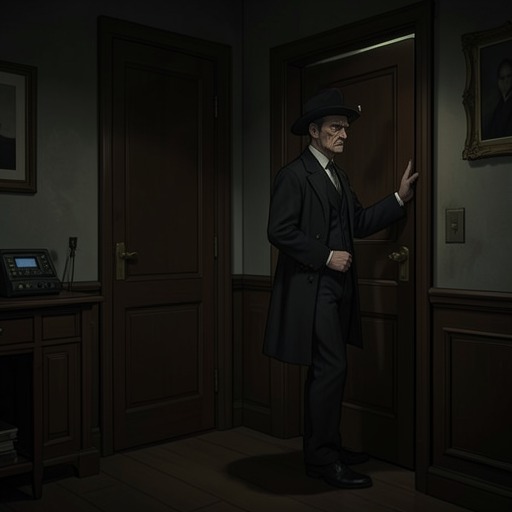
The residence is also where Inspector Javert and Jean Valjean arrive together. Their carriage has to stop at the entrance because it cannot enter the narrow street. They proceed on foot to number 7, and the door opens. The approach makes the street’s restriction on vehicles a concrete part of the scene: the lane that seemed to separate itself from the city must be crossed step by step to reach the house.
Later, Marius takes Cosette in a carriage to the same address. At number 7, Cosette expresses happiness at going to see Monsieur Jean, and the door opens to reveal her and Marius. Their arrival gives the residence a final function distinct from concealment: it is the setting for the return to Jean Valjean. Across these visits, number 7 gathers together the consequences of the move—its intended secrecy, the inadvertent disclosure of Cosette’s message, and the reunion that follows.